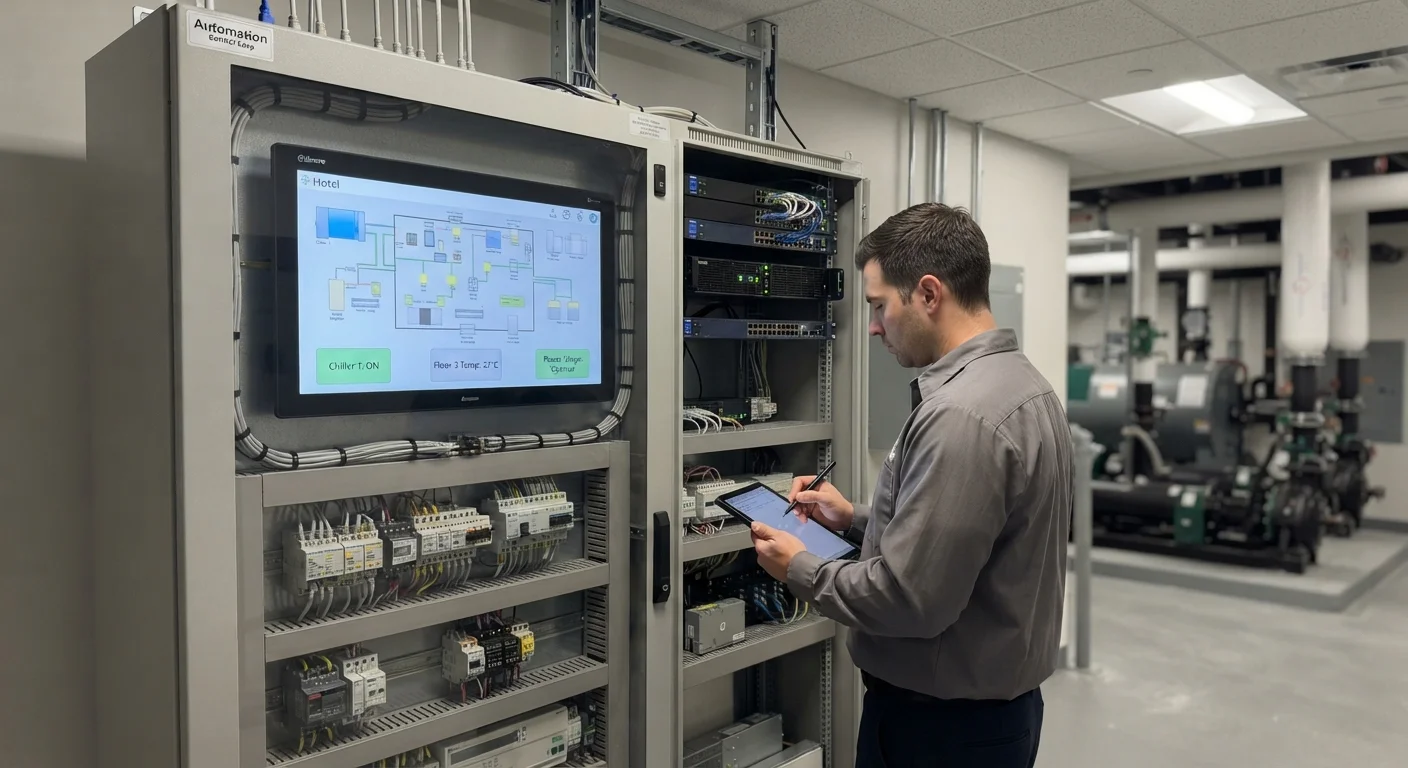
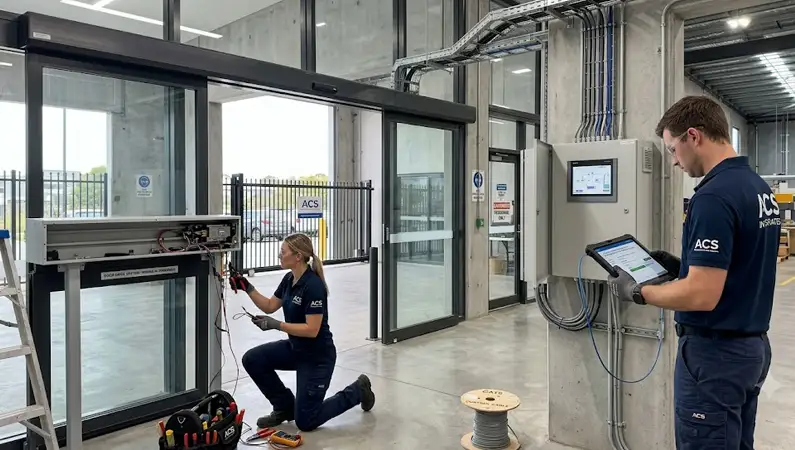
Modern industrial operations require intelligent, responsive, and reliable technology infrastructure. In Ontario’s competitive market, relying on outdated manual processes or disconnected machinery leads to excessive downtime, inefficiencies, and quality control issues. Engineered industrial automation and control systems solve these operational challenges by unifying hardware and software to monitor operations, streamline workflows, and deliver critical real-time data.
What You’ll Learn:
Core Automation Technologies: How PLCs, SCADA, and HMIs centralize machine control and monitoring.
Legacy Modernization: Strategies for upgrading obsolete control panels without halting production.
System Integration: Unifying industrial control systems with network infrastructure, security, and building controls.
Compliance & Standards: Meeting Ontario safety requirements (CSA/ESA) to protect your facility and workforce.
Upgrading your control infrastructure directly improves operational efficiency, reduces maintenance costs, and safeguards long-term productivity.
Ready to optimize your facility’s operations? [Discuss Your Project with Our Engineering Team] or [Request a Control System Assessment].
End-to-End Automation Solutions
Deploying an automation system requires a holistic approach. Disconnected hardware and poor planning often result in budget overruns and operational bottlenecks. Comprehensive automation engineering services ensure that every phase of the project—from initial design to final deployment—is executed with precision and aligned with your business objectives.
Consultation & Assessment
A successful automation project begins with a rigorous evaluation of your existing infrastructure. During this phase, automation consultants analyze your current operational workflows, identify production bottlenecks, and assess the condition of legacy equipment.
Best Practice: Always conduct a front-end engineering design (FEED) study before selecting hardware.
Business Benefit: Thorough assessment eliminates unexpected change orders and ensures the proposed automation solutions are precisely tailored to your facility’s unique operational requirements.
Engineering & Design
The engineering phase translates operational goals into technical specifications. This involves developing detailed piping and instrumentation diagrams (P&ID), network architectures, and hardware blueprints.
Best Practice: Design control systems with future scalability in mind, utilizing modular architectures that allow for easy expansion.
Business Benefit: Proper control system design guarantees that the infrastructure can accommodate future technological advancements, protecting your initial capital investment.
Installation & Commissioning
Installation goes beyond mounting panels and pulling cables. It requires methodical execution to ensure all mechanical and electrical components interact seamlessly. Commissioning involves powering up the system, calibrating instruments, and verifying input/output (I/O) signals.
Best Practice: Execute a Site Acceptance Test (SAT) in controlled phases to validate performance under actual operational loads.
Business Benefit: Phased commissioning significantly reduces the risk of unplanned downtime when transitioning from old systems to the new automation infrastructure.
Testing & Validation
Before a system goes into full production, rigorous testing is mandatory. This includes stress-testing the network, verifying safety instrumented systems, and validating that the process automation meets all predefined performance criteria.
Best Practice: Implement comprehensive loop checks and simulate fault conditions to observe how the control system responds to failures.
Business Benefit: Validation ensures compliance with industry standards and guarantees that the system operates safely and reliably under all conditions.
Ongoing Support
Automation systems require continuous monitoring and proactive maintenance to maintain peak performance. Ongoing technical support involves software patching, hardware inspections, and continuous operator training.
Best Practice: Establish a structured preventive maintenance schedule combined with remote monitoring capabilities.
Business Benefit: Reliable support maximizes the lifespan of your industrial automation systems and prevents minor anomalies from escalating into critical operational failures.
Industrial Control System Integration
Many facilities operate with a mix of legacy machinery and modern equipment, often from different manufacturers. Control system integration is the process of connecting these disparate systems into a unified, communicative network, eliminating data silos and centralized control.
New System Integration
Integrating a completely new system requires aligning the latest automation technologies with your facility’s mechanical realities. Control system engineering focuses on establishing robust communication backbones, ensuring that new PLCs, sensors, and actuators work in perfect synchronization from day one.
Existing System Expansion
As production demands grow, expanding existing automation systems becomes necessary. This requires integrating new modules without disrupting current operations. Professional integrators ensure that existing network bandwidth and power capacities can handle the increased load, preventing unexpected system crashes during scale-up.
Multi-Vendor Integration
Industrial plants rarely rely on a single equipment manufacturer. You may have Siemens PLCs on one line and Allen-Bradley drives on another. Multi-vendor integration utilizes standardized communication protocols (such as Ethernet/IP or Modbus TCP) to ensure seamless data exchange across different hardware platforms, providing operators with a single, unified dashboard.
Third-Party Equipment Integration
Specialized third-party equipment, such as automated guided vehicles (AGVs) or robotic arms, must communicate seamlessly with the central supervisory system. Integrating third-party APIs and custom drivers ensures that these specialized units coordinate perfectly with the broader manufacturing automation ecosystem.
PLC Programming & Automation
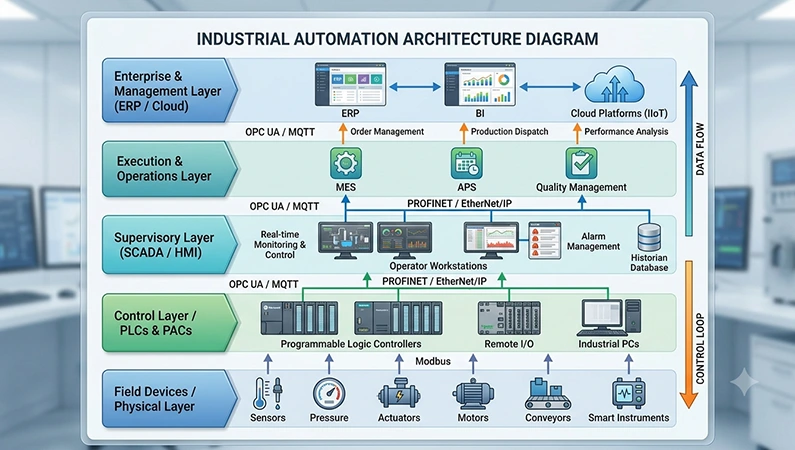
The Programmable Logic Controller (PLC) is the ruggedized industrial computer that drives machine automation. It reads inputs from sensors, processes the logic, and triggers outputs to actuators and motors. Reliable PLC programming is the foundation of any stable industrial control system.
PLC Programming
Developing robust PLC code requires deep understanding of industrial processes and adherence to IEC 61131-3 standards (such as Ladder Logic or Structured Text). Clean, modular code ensures that the machinery operates precisely according to sequence.
Professional Recommendation: Avoid overly complex, undocumented logic. Modular programming allows maintenance personnel to troubleshoot issues rapidly.
PLC Upgrades
Running obsolete PLCs exposes facilities to severe risks, including unprocurable replacement parts and cybersecurity vulnerabilities. Upgrading your PLC involves migrating the legacy code to modern hardware architectures, ensuring faster processing speeds and enhanced network connectivity.
PLC Troubleshooting
When production halts, rapid fault identification is critical. Experienced PLC programmers use diagnostic software to trace logic pathways, identify faulty I/O modules, or correct network communication errors, drastically reducing mean time to repair (MTTR).
PLC Retrofit
A PLC retrofit replaces the outdated control “brain” while retaining the existing heavy machinery and mechanical components. This is a highly cost-effective automation retrofit strategy for extending the life of capital-intensive industrial equipment.
PLC Optimization
Even functioning systems can often perform better. PLC optimization involves refining the existing code to reduce cycle times, minimize mechanical wear, and improve the overall energy efficiency of the machine control systems.
SCADA Systems
Supervisory Control and Data Acquisition (SCADA) systems provide high-level process supervisory management. While PLCs handle the localized, real-time control, SCADA gathers data from all PLCs across the facility, providing visual dashboards, historical data logging, and critical alarm management.
SCADA Design
Effective SCADA design focuses on situational awareness. The architecture must reliably aggregate data from thousands of tags across the plant floor without lagging.
Best Practice: Utilize high-performance graphics that prioritize abnormal conditions, allowing operators to spot issues instantly.
Remote Monitoring
Modern SCADA systems offer secure, web-based remote monitoring. Facility managers and engineers can view live production metrics, acknowledge alarms, and adjust setpoints from any location, improving response times to critical events.
Data Acquisition
SCADA systems continuously log historical data regarding temperatures, pressures, speeds, and energy consumption. This data acquisition is the cornerstone of production analytics, enabling management to identify trends and optimize manufacturing workflows.
Alarm Management
An unmanaged SCADA system can flood operators with nuisance alarms, leading to “alarm fatigue.” Proper alarm management categorizes alerts by severity, ensuring that operators only receive critical notifications requiring immediate intervention.
HMI Development & Operator Interfaces
The Human Machine Interface (HMI) is the local screen where operators interact with specific machines. Effective HMI development bridges the gap between complex machine logic and human operators.
HMI Programming
HMI programming involves linking screen graphics directly to PLC data tags. The programming must ensure immediate response times when operators input commands or adjust operational parameters.
HMI Design
Industrial HMI design must prioritize clarity over complexity. Utilizing industry standards like ISA-101 for high-performance HMI design ensures that screens are intuitive, use color purposefully to indicate status changes, and minimize operator error during high-stress situations.
HMI Integration
Integrating the HMI securely with the machine network ensures that data flows without interruption. HMI integration also involves setting up proper user access levels, ensuring that only authorized personnel can change critical machine parameters.
Industrial Control Panels
The industrial control panel houses the critical electronic components—PLCs, VFDs, contactors, and relays—protecting them from harsh factory environments. Proper control panel design and manufacturing are essential for system safety and reliability.
Panel Design
Control panel design starts with precise CAD schematics and thermal calculations. The design must account for proper wire routing, component spacing for heat dissipation, and strict adherence to electrical codes.
Business Benefit: A well-designed panel prevents overheating, reduces electrical noise interference, and makes future troubleshooting significantly easier.
Panel Assembly
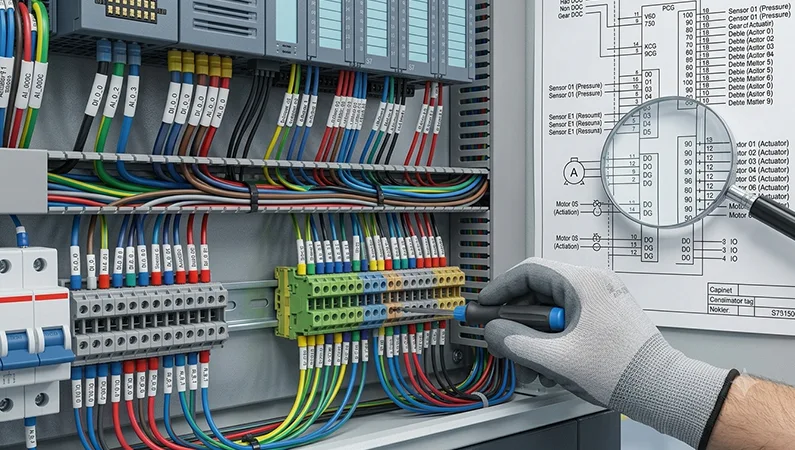
During panel assembly, technicians wire the components according to the engineered schematics. High-quality panel manufacturing requires meticulous wire labeling, secure terminal connections, and organized cable management.
Factory Testing
Before a panel leaves the manufacturing facility, it must undergo a Factory Acceptance Test (FAT). This process validates all point-to-point wiring, tests power distribution, and simulates I/O signals to ensure the panel functions exactly as designed.
On-Site Installation
On-site installation involves securely mounting the enclosure, connecting field wiring, and ensuring proper grounding. Professional installation guarantees that the electrical control panels integrate safely into the facility’s existing power infrastructure.
Automation System Modernization & Legacy Upgrades
Relying on legacy control systems is a hidden operational liability. When obsolete components fail, the lack of available spares can halt production for days or weeks. Control system modernization addresses these risks proactively.
Migrating from outdated platforms requires careful planning to minimize disruption. A structured automation retrofit often involves phased cutovers—installing new hardware in parallel with the old, and transferring control incrementally.
Professional Recommendation: Do not wait for a catastrophic failure. Plan your legacy control system upgrade during scheduled maintenance windows to protect your operational continuity.
Industry 4.0 & IIoT Solutions
The convergence of Information Technology (IT) and Operational Technology (OT) is defining the next era of manufacturing. Industry 4.0 and the Industrial Internet of Things (IIoT) transform traditional automated facilities into smart, interconnected operations.
IIoT Connectivity
IIoT connectivity involves deploying smart sensors that communicate directly with cloud or edge computing platforms. This bypasses traditional data silos, providing a continuous stream of granular data regarding machine health and environmental conditions.
Production Analytics
By applying advanced analytics to the data harvested from SCADA and IIoT devices, businesses gain unprecedented visibility into their operations. Production analytics help identify micro-stoppages, calculate Overall Equipment Effectiveness (OEE), and uncover hidden inefficiencies.
Predictive Maintenance
Instead of replacing parts on a fixed schedule or waiting for them to break, predictive maintenance utilizes machine learning algorithms to analyze vibration, temperature, and current draw. The system predicts exactly when a component is likely to fail, allowing maintenance to be scheduled proactively.
Cloud Connectivity
Secure cloud connectivity allows enterprise-level systems (like ERP or MES) to access plant floor data. This seamless data flow aligns supply chain logistics, inventory management, and production scheduling in real-time.
Building Automation Systems
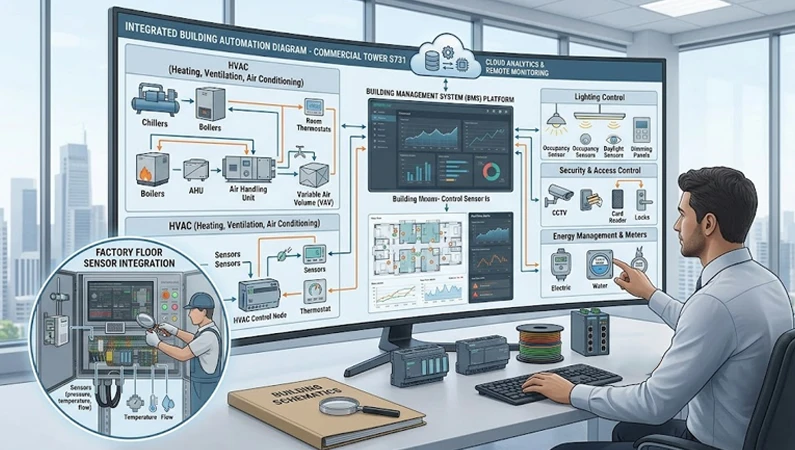
Automation is not limited to the manufacturing floor. Commercial building automation optimizes the environment and energy consumption of large facilities. Building automation systems (BAS) centrally control HVAC, lighting, and environmental sensors.
By integrating building control systems, facility managers can significantly reduce energy expenditure, improve tenant comfort, and streamline facility operations. Smart building automation automatically adjusts lighting and climate based on occupancy schedules and ambient conditions, driving long-term operational efficiency.
Industries We Serve
Different sectors require highly specialized automation approaches. We deploy customized technology infrastructure tailored to the specific regulatory and operational demands of your industry.
Manufacturing
Manufacturing automation focuses on high-speed assembly, robotics integration, and strict quality control. Automated systems ensure consistent cycle times and reduce material waste.
Food Processing
Food processing automation requires wash-down rated equipment and strict adherence to sanitary standards. Automation ensures precise ingredient batching, temperature control, and complete product traceability.
Pharmaceutical
Pharmaceutical automation demands rigorous validation and compliance with 21 CFR Part 11 for electronic records. Systems must maintain tight environmental controls and provide unalterable audit trails.
Warehouses
Warehouse automation utilizes automated conveyors, sorting systems, and integration with Warehouse Management Systems (WMS) to accelerate order fulfillment and optimize inventory tracking.
Commercial Buildings
Commercial building automation focuses on energy management, access control, and HVAC optimization, ensuring a comfortable environment while minimizing utility costs.
Water Treatment
Water treatment automation relies heavily on robust SCADA systems to monitor remote pumping stations, manage chemical dosing, and ensure compliance with municipal water quality standards.
Utilities
Utility automation involves wide-area network monitoring of power grids and distribution substations, requiring high-availability control systems and secure remote access.
Data Centers
Data center infrastructure requires hyper-reliable environmental controls. Automation ensures precise cooling, power redundancy monitoring, and immediate alarming to prevent server overheating.
Technologies & Platforms We Work With
Choosing the right technology stack is critical for long-term reliability. We engineer solutions using industry-leading hardware and open-standard protocols.
Automation Technologies
| Technology | Purpose | Applications |
| PLC | Real-time logic processing and machine control. | Conveyors, assembly lines, motor control. |
| SCADA | Supervisory control, data logging, and alarming. | Plant-wide monitoring, water treatment, utilities. |
| HMI | Localized operator interface and graphics. | Machine status display, setpoint adjustment. |
| VFD | Variable frequency drive for motor speed control. | Fans, pumps, energy-efficient motor applications. |
| IIoT Sensors | Advanced data collection and edge computing. | Predictive maintenance, vibration analysis. |
PLC Manufacturers
| Vendor | Typical Applications |
| Siemens | Heavy industrial manufacturing, process control. |
| Allen-Bradley | North American standard for factory automation. |
| Schneider Electric | Power management, building automation. |
| Omron | Packaging, high-speed machine control. |
| ABB | Robotics integration, heavy process industries. |
Communication Protocols
| Protocol | Common Use |
| Ethernet/IP | High-speed, real-time industrial network communication. |
| Modbus TCP | Universal protocol for integrating diverse third-party devices. |
| BACnet | Standard for commercial building automation and HVAC. |
| Profinet | Advanced industrial ethernet for manufacturing automation. |
Automation Project Workflow
Executing a successful automation project requires a disciplined, structured methodology.
- Assessment: Comprehensive site audit, requirements gathering, and FEED study.
- Engineering: Developing P&ID, network architecture, and hardware selection.
- Programming: Writing PLC logic and developing high-performance SCADA/HMI screens.
- Panel Design: Engineering and fabricating CSA/UL compliant control panels.
- Installation: Deploying network infrastructure, mounting hardware, and terminating cables.
- Testing: Performing comprehensive FAT and SAT validation.
- Training: Empowering facility operators and maintenance teams with system knowledge.
- Support: Providing ongoing preventive maintenance and remote technical support.
Benefits of Industrial Automation
Investing in industrial automation solutions delivers immediate and measurable returns on investment.
- Higher Productivity: Automated systems operate continuously without fatigue, significantly increasing throughput.
- Reduced Downtime: Reliable machine control and predictive maintenance minimize unexpected equipment failures.
- Improved Safety: Automation removes human workers from hazardous environments and incorporates Safety Instrumented Systems (SIS).
- Better Quality: Precise, repeatable processes eliminate human error and ensure consistent product quality.
- Lower Operating Costs: Optimized energy usage and reduced material waste directly improve profit margins.
- Real-Time Monitoring: SCADA and IIoT provide instant visibility into operations, enabling data-driven decision-making.
Integration With Other Building & Industrial Systems
Automation systems do not operate in a vacuum. For maximum facility efficiency, industrial control systems should integrate seamlessly with your broader technology infrastructure.
By converging automation networks with your [Network Infrastructure & Structured Cabling], you ensure high-bandwidth, reliable data transmission. Furthermore, integrating automation with [Security Systems], such as [CCTV Integration] and [Access Control], allows for unified facility management. For example, a fire alarm integration can automatically trigger building automation systems to shut down HVAC units and open specific access doors during an emergency, enhancing overall life safety and smart building performance.
Compliance & Safety Standards
In Ontario and across Canada, compliance with electrical and safety standards is non-negotiable. Poorly designed systems pose severe safety risks and can result in facility shutdowns by regulatory bodies.
Professional Recommendation: Ensure all automation engineering and panel design strictly adhere to:
- CSA (Canadian Standards Association): For overall electrical safety and machinery guarding.
- ESA (Electrical Safety Authority): For mandatory field evaluations and electrical code compliance in Ontario.
- UL / ULC: For component-level certification and fire safety standards.
Proper documentation, safety relay integration, and adherence to these codes ensure that your automation infrastructure is legally compliant and safe for your workforce.
Maintenance & Technical Support
An automation system is only as reliable as its maintenance program. Reactive maintenance—waiting for a breakdown—is the most expensive strategy.
- Preventive Maintenance Automation: Scheduled inspections of control panels, verifying wire terminations, and replacing wear components before they fail.
- PLC Maintenance: Regularly backing up PLC programs, replacing internal batteries, and applying firmware security patches.
- Industrial Automation Support: Having a dedicated automation contractor available for rapid remote troubleshooting or on-site intervention minimizes operational disruption.
When Should You Upgrade Your Control System?
Recognizing the signs of system obsolescence is critical for preventing catastrophic downtime.
| Symptom | Recommended Solution |
| Replacement parts are unavailable. | Initiate a phased PLC upgrade to a modern platform. |
| Frequent unexplainable machine stops. | Conduct a system audit and PLC troubleshooting to identify logic or network faults. |
| Lack of operational data visibility. | Implement SCADA integration and IIoT connectivity. |
| System cannot communicate with new machinery. | Perform control system integration utilizing modern Ethernet protocols. |
| Software runs on unsupported operating systems (e.g., Windows 7). | Execute a full automation system modernization and HMI upgrade to mitigate cybersecurity risks. |
Frequently Asked Questions
What are automation and control systems?
They are engineered combinations of hardware (PLCs, sensors) and software (SCADA, HMI) designed to operate machinery and processes automatically, reducing the need for human intervention while increasing efficiency.
What is a PLC?
A Programmable Logic Controller (PLC) is a ruggedized industrial computer used to control manufacturing processes. It reads inputs, executes programmed logic, and commands outputs.
What is SCADA?
Supervisory Control and Data Acquisition (SCADA) is a software architecture used for high-level process supervision, data logging, and remote monitoring of industrial systems.
What is the difference between PLC and SCADA?
A PLC controls the physical machinery in real-time. SCADA is the overarching software system that gathers data from multiple PLCs, providing visual dashboards and historical analytics.
What is control system integration?
It is the process of connecting disparate machines, PLCs, and software systems—often from different manufacturers—so they communicate seamlessly and function as a single, unified operation.
How much does an automation project cost?
Costs vary entirely based on scale, from a few thousand dollars for a simple control panel upgrade to hundreds of thousands for a facility-wide SCADA and PLC retrofit. A detailed consultation is required for accurate scoping.
How long does an automation project take?
Timelines range from a few weeks for minor HMI/PLC upgrades to several months for designing, building, and commissioning end-to-end automation solutions.
When should a control system be upgraded?
You should upgrade when hardware becomes obsolete, replacement parts are no longer manufactured, cybersecurity risks increase, or when the existing system cannot support required production expansions.
What are the benefits of industrial automation?
Primary benefits include significant increases in production throughput, reduction of human error, lower operating costs, enhanced workplace safety, and the ability to monitor operations in real-time.
What industries use automation systems?
Automation is essential across nearly all sectors, notably in manufacturing, food and beverage processing, pharmaceuticals, water treatment, commercial building management, and data centers.
Why Choose Elmore Integrated Systems?
Selecting the right integration partner is critical to ensuring your automation infrastructure remains reliable, compliant, and scalable. Elmore Integrated Systems delivers complete, structured control solutions tailored to commercial and industrial facilities across Ontario.
Local Ontario Team: Fast, responsive on-site support across the Greater Toronto Area (GTA) and surrounding regions, backed by a thorough understanding of Canadian regulatory compliance (including CSA and ESA requirements).
End-to-End Accountabilty: We manage the full project lifecycle internally—from assessment and engineering design to control panel fabrication, PLC/SCADA programming, testing, and commissioning.
Multi-Vendor Expertise: A platform-agnostic approach that seamlessly integrates major platforms—including Allen-Bradley, Siemens, Schneider Electric, ABB, and Omron—into a unified control network.
Proactive & Emergency Support: Structured preventive maintenance programs to reduce unplanned downtime, paired with rapid diagnostic support for unexpected system faults.
Long-Term Partnership: Continuous technical support, operator training, and strategic modernization roadmaps to ensure your technology infrastructure scales alongside your operational goals.
Discuss Your Project
Ready to modernize your facility’s technology infrastructure? Contact ElmoreIS to discuss your specific operational challenges and learn more about our commercial automation engineering services.