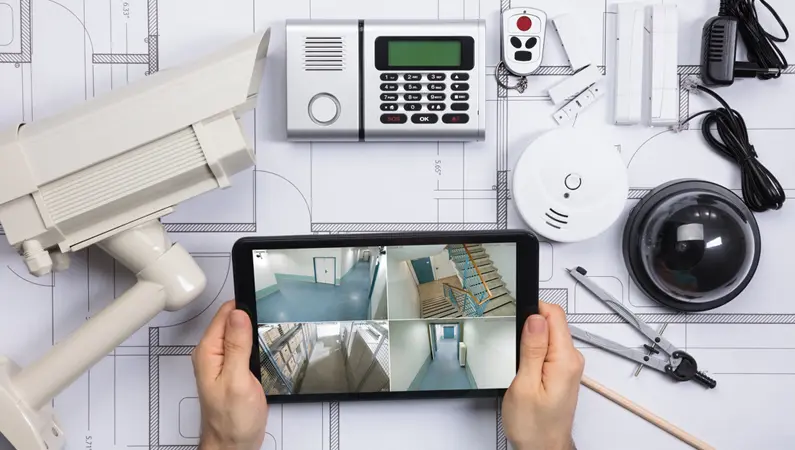
Unmonitored facility access, undocumented visitor traffic, and fragmented surveillance create severe liability and operational risks for commercial property managers and business owners. Today, a modern protection infrastructure is no longer just a collection of isolated cameras or standalone door locks; it requires an intelligent, responsive, and reliable technology ecosystem.
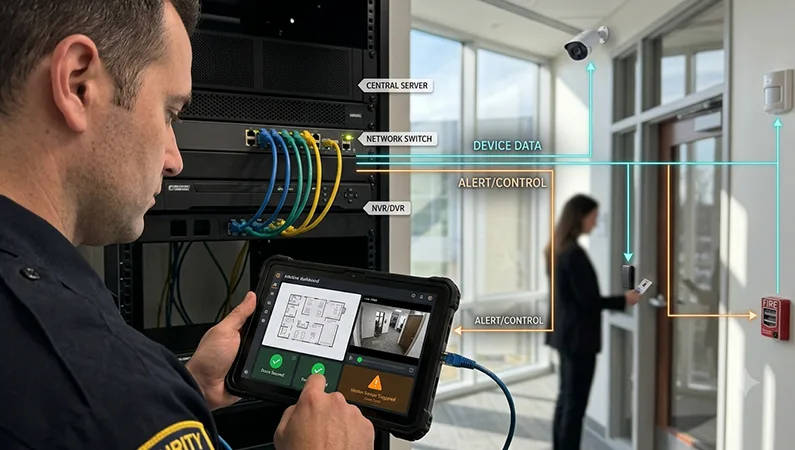
At Elmore Integrated Systems, we serve as your commercial technology integration partner. We help organizations across Ontario design, install, integrate, and maintain unified protection platforms that safeguard critical assets, monitor daily operations, and secure your workforce. A properly engineered infrastructure combines video surveillance, access control, intrusion detection, and analytics into a single, cohesive network.
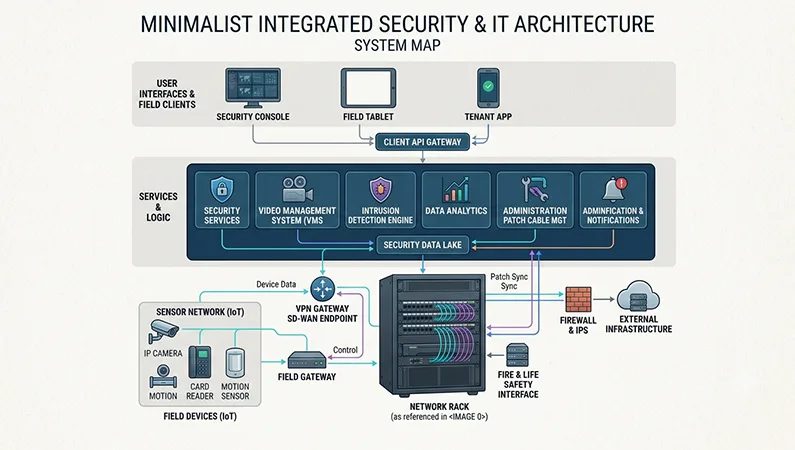
For commercial buildings, logistics hubs, manufacturing plants, and healthcare institutions, implementing a cohesive technology deployment transforms vulnerability into structured operational control. Relying on outdated manual processes or disconnected hardware leads to inefficiencies, excessive downtime, and quality control issues.
Ready to evaluate your facility’s vulnerabilities? [Request a Comprehensive Security Assessment] or [Talk With Our Team] to discuss your operational challenges.
What You Will Learn
- The Business Value: How a unified protection ecosystem reduces operational costs, mitigates liability, and delivers a measurable ROI.
- Core Technologies: The role of intelligent video monitoring, electronic access, and automated visitor management in commercial environments.
- The Integration Advantage: Why connecting separate hardware into one unified platform is essential for rapid incident response.
- Our Project Framework: What to expect during collaboration, from initial site audit to final operator training and long-term support.
- Industry Applications: Tailored approaches for offices, warehouses, manufacturing, and retail environments.
The Business Value of Modern Security Infrastructure
Investing in a commercial protection ecosystem is not merely a defensive measure against theft; it is a strategic business decision that directly impacts your bottom line, operational efficiency, and legal compliance. Business leaders must view these deployments through the lens of enterprise risk management.
Measurable Risk and Liability Reduction
Workplace incidents, slip-and-fall claims, and inventory shrinkage cost Canadian businesses millions annually. A high-definition, intelligently archived surveillance network provides indisputable video evidence. When fraudulent claims arise, having clear, time-stamped documentation protects the organization from costly legal settlements and reputational damage.
Lowering Operational Costs
Maintaining a large physical guard force is increasingly expensive. By deploying an intelligent protection network, businesses can significantly reduce their reliance on manual guard patrols. Automated access protocols handle credential verification, while smart cameras instantly alert remote operators only when human verification is required. This transition from physical labor to automated technology drastically lowers monthly operational expenditures.
Enhancing Employee Safety and Workplace Culture
A secure environment is a productive environment. Employees working late shifts or navigating large industrial parking lots need assurance that their surroundings are monitored. Implementing well-lit, camera-covered perimeters and restrictive entry protocols ensures that unauthorized individuals cannot access staff areas. This proactive approach to safety improves employee retention and morale.
Regulatory Compliance and Audit Trails
Many industries—particularly healthcare, finance, and pharmaceutical manufacturing—are bound by strict regulatory standards regarding data privacy and physical access. Modern electronic credentialing provides a permanent, searchable audit trail. Facility managers can instantly generate reports showing exactly who entered a specific server room, drug storage area, or executive suite, satisfying strict compliance audits with ease.
Favorable ROI and Insurance Premium Reductions
Commercial insurance providers heavily factor facility safety into their premium calculations. Demonstrating that your building operates a professionally monitored intrusion detection network, backed by a comprehensive electronic access platform, often qualifies the business for significant insurance discounts. Over the lifespan of the equipment, these premium savings alone can offset a substantial portion of the installation cost.
Traditional vs. Integrated Security Systems
Understanding the distinction between legacy setups and modern deployments is critical for facility managers planning their capital expenditures.
| Feature | Traditional Security | Integrated Security Solutions |
| System Architecture | Disconnected hardware (alarms, cameras, and locks operate in silos). | Unified platform (all devices communicate over a shared IT network). |
| Monitoring | Manual observation required; operators must watch screens continuously. | Automated alerting; the system notifies operators only when a specific rule is broken. |
| Incident Response | Slow; requires checking three different software programs to verify an event. | Immediate; an alarm trigger automatically brings up the relevant camera feed on one screen. |
| User Management | Highly administrative; physical keys must be tracked, cut, and replaced. | Streamlined; credentials are added, modified, or revoked instantly from a central dashboard. |
| Scalability | Limited; adding new cameras or doors often requires entirely new proprietary cabling. | Highly scalable; new devices seamlessly join the existing enterprise network infrastructure. |
Our Comprehensive Commercial Security Services
Managing multiple vendors for different aspects of your building’s infrastructure often leads to compatibility issues and project delays. Elmore Integrated Systems provides complete, end-to-end delivery of all critical low-voltage infrastructure.
1. Commercial Video Surveillance (CCTV)
The Business Problem:
Facility managers often struggle with blind spots, unusable grainy footage during night hours, and the massive time drain of reviewing days of recordings to find a five-minute incident.
The Explanation: We deploy enterprise-grade IP video surveillance networks that transmit high-resolution data over your structured cabling infrastructure. These systems utilize cloud-managed storage or reliable on-premise recording, ensuring your visual data is always accessible.
Best Practice:
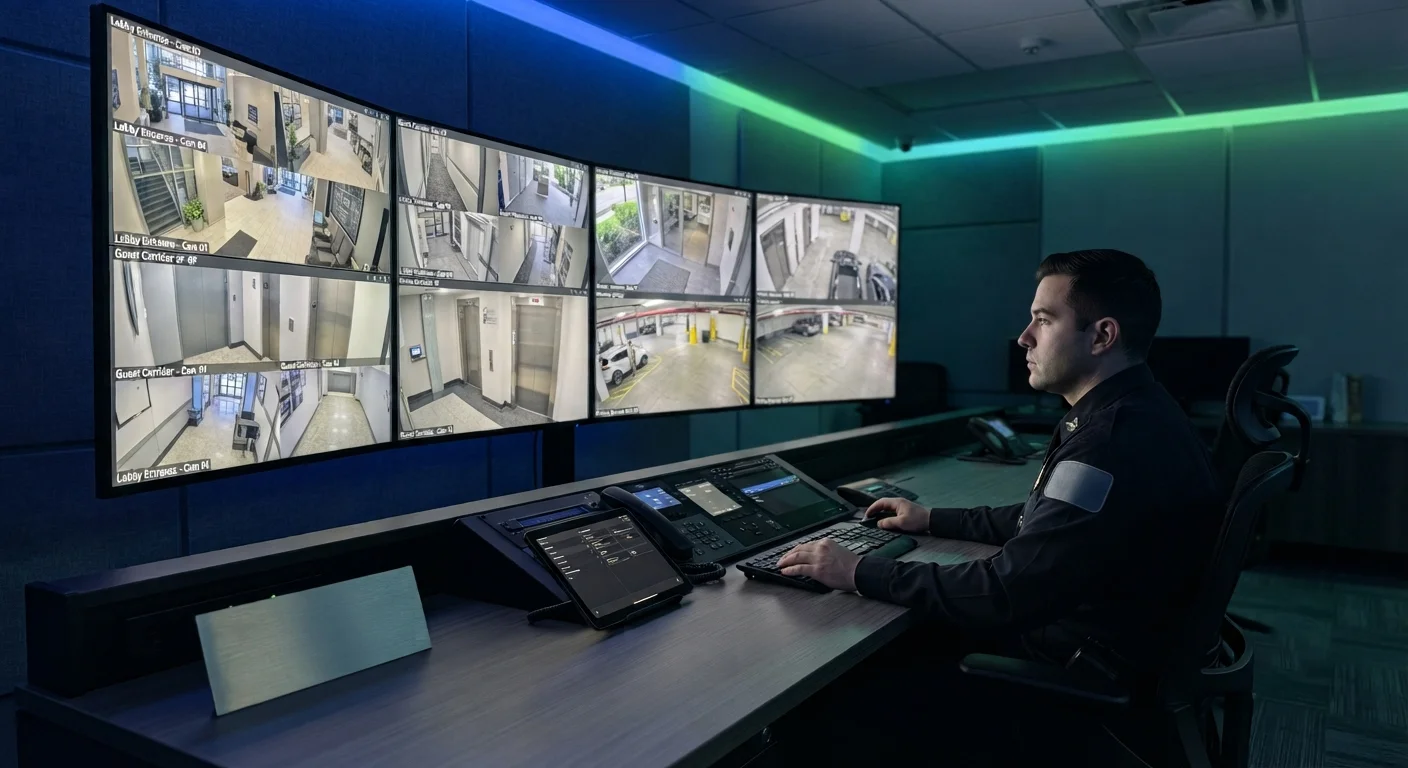
Deploy cameras equipped with intelligent analytics. Rather than recording empty hallways continuously, the network should be configured to flag specific events—such as a person crossing a digital perimeter after hours, or a vehicle loitering near a loading dock.
The Business Benefit:
This targeted approach reduces the time HR or facility managers spend searching for evidence from hours to mere minutes. It also drastically reduces false alarms, ensuring that when an alert is generated, it warrants immediate attention.
Professional Recommendation:
Do not rely on local recording alone. Implement cloud-based redundancy for critical oversight areas. If on-site hardware is compromised during a severe incident, your essential video evidence remains secure off-site.
2. Electronic Access Control Systems
The Business Problem:
Managing physical brass keys for a growing workforce is an administrative nightmare. When an employee leaves the company without returning their key, the business faces a difficult choice: risk a security breach or incur the high cost of rekeying the entire facility.
The Explanation:
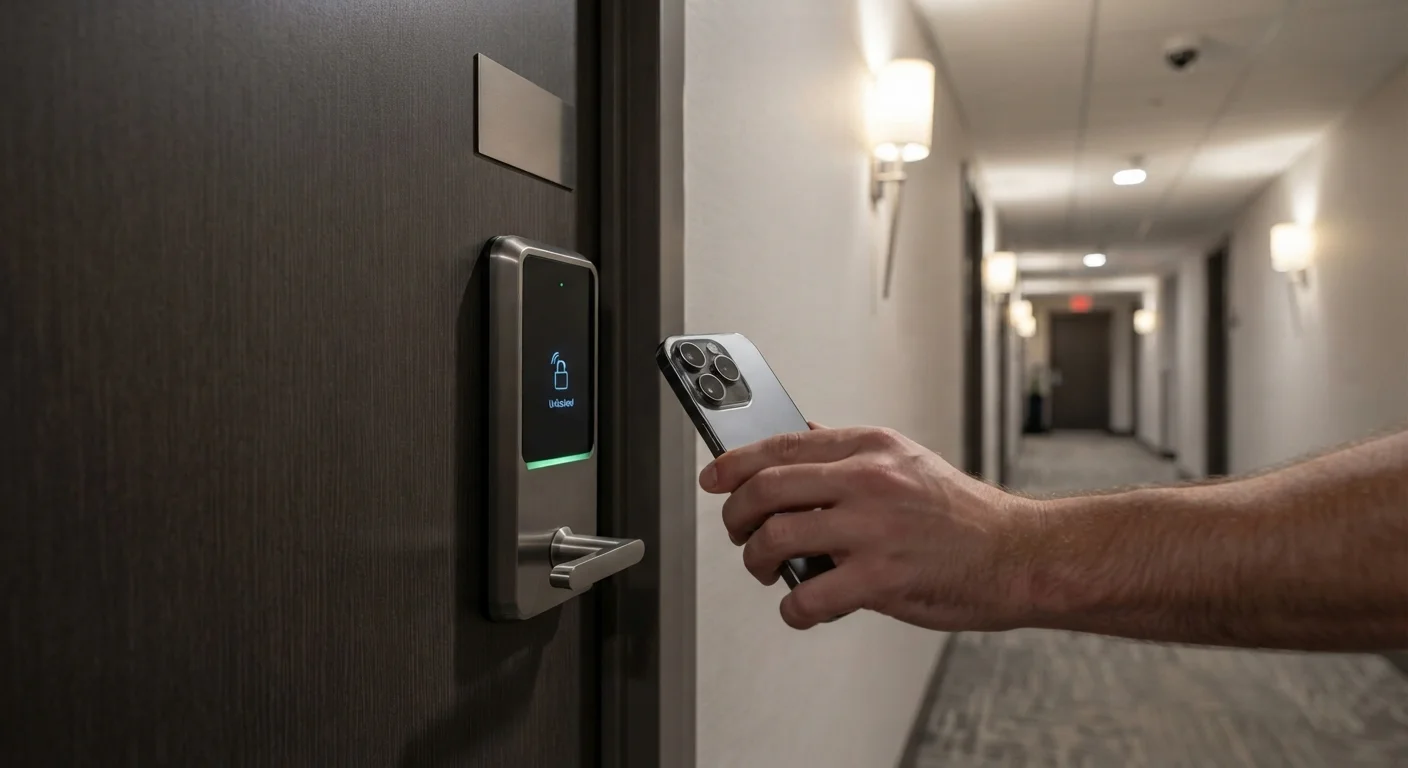
Electronic access control replaces physical keys with encrypted digital credentials. Employees use key fobs, smart cards, or their mobile devices to unlock doors. The central database determines who is allowed where, and at what times.
Best Practice:
Implement strict Role-Based Access Control (RBAC). Standard employees should only have access to main entrances and their specific departments during regular business hours, while IT staff maintain 24/7 access to server rooms.
The Business Benefit:
When an employee is terminated, their access is revoked instantly across the entire facility with a single click—no locksmith required. Furthermore, the system logs every entry attempt, providing an invaluable audit trail for internal investigations.
Professional Recommendation:
Integrate your access protocols directly with your HR onboarding software. This ensures that new hires automatically receive appropriate building access on their first day, and departing staff are immediately restricted.
3. Intrusion Detection & Alarm Monitoring
The Business Problem:
After-hours break-ins can result in devastating financial losses and operational disruption before law enforcement is even notified.
The Explanation:
Commercial alarm systems create an invisible perimeter around your facility. Utilizing door contacts, glass break sensors, and intelligent motion detectors, the system identifies unauthorized entry and communicates instantly with a 24/7 central monitoring station.
Best Practice:
Configure the system to require visual verification. When an alarm triggers, the central station should immediately receive a video clip from the nearest camera to verify if the threat is real or a false alarm caused by environmental factors.
The Business Benefit:
Verified alarms receive priority dispatch from local police departments. This dramatically improves response times and protects your business from the heavy municipal fines associated with repeated false alarm dispatches.
Professional Recommendation:
Ensure your intrusion network utilizes dual-path communication (internet primary with cellular backup). If a sophisticated intruder cuts the physical phone or data lines, the system must still transmit critical alerts wirelessly.
4. Door Entry & Visitor Management (Intercoms)
The Business Problem:
Allowing unverified delivery personnel, contractors, or visitors to wander freely through a corporate office or industrial plant introduces massive liability and exposes staff to potential harm.
The Explanation:
Modern video intercoms serve as the first line of defense. Placed at main entrances and shipping doors, they allow receptionists or remote operators to visually verify a visitor’s identity and intent before remotely unlocking the door.
Best Practice:
Deploy smart intercom solutions that route calls directly to employee smartphones or desktop applications, ensuring a visitor is never left waiting, even if the receptionist is away from the desk.
The Business Benefit:
Streamlining visitor flow improves the professional image of your business while maintaining strict entry protocols. It also allows facilities to operate securely without requiring a dedicated security guard stationed at every single entry point.
Professional Recommendation:
In high-traffic environments, integrate the intercom with a digital visitor management kiosk. Guests can sign digital NDAs, print temporary badges, and notify their host automatically upon arrival.
Need to modernize your facility’s entry protocols? [Discuss Your Project] with our access control specialists to explore mobile credentialing and automated visitor management.
Why Choose Elmore Integrated Systems?
The commercial integration market is crowded, but selecting the right partner determines the long-term reliability of your technology deployment. Businesses across Ontario choose Elmore Integrated Systems for our structured, business-first approach.
Local Ontario Team & Expertise
Based in Ontario, we understand the regional industrial landscape, specific building codes, and Canadian regulatory requirements. Being local allows us to offer highly responsive on-site support across the Greater Toronto Area (GTA) and surrounding regions, ensuring clear communication throughout your project.
Single-Source, End-to-End Delivery
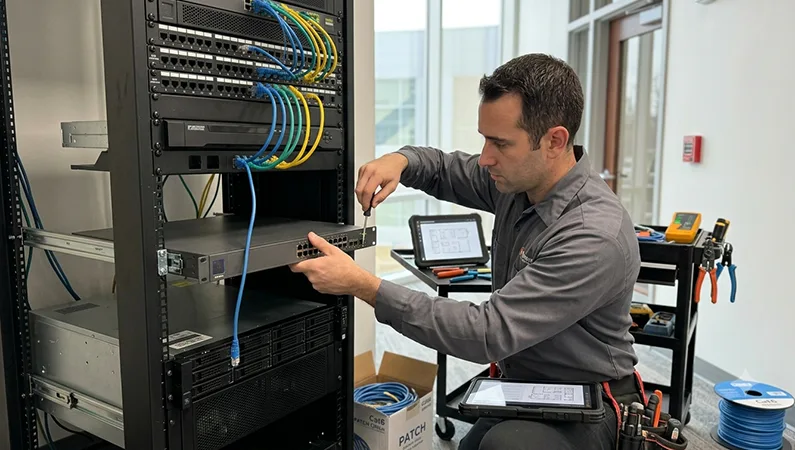
We do not simply sell equipment and walk away. We manage the complete project lifecycle internally—from initial consultation and network engineering to cable pulling, hardware installation, software configuration, and final commissioning. This single-source accountability eliminates the frustrating vendor conflicts that occur when the IT contractor and the security contractor blame each other for system failures.
Certified Engineers & Technical Standards
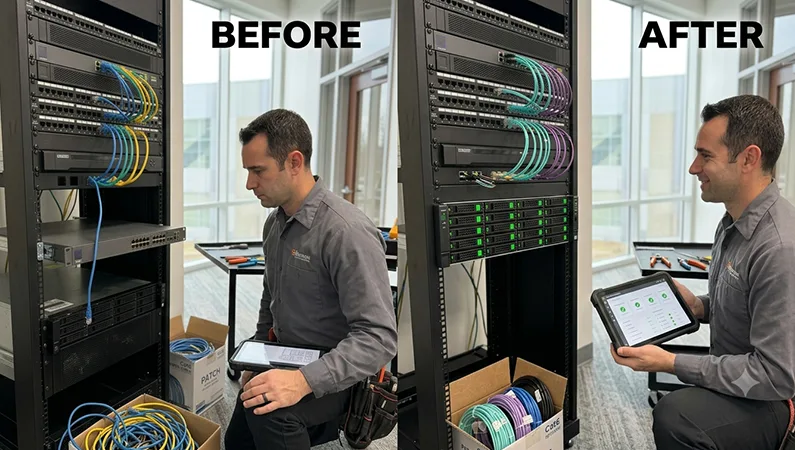
Our team consists of qualified technicians trained in accepted industry standards and low-voltage electrical safety practices. Every deployment is documented meticulously, ensuring that cable management is clean, network racks are organized, and the infrastructure is built to last.
Platform-Agnostic, Multi-Vendor Approach
We are not tied to a single proprietary manufacturer. We design solutions based on what best solves your operational problems, utilizing open-architecture platforms. This ensures your business is never locked into a restrictive ecosystem and can always scale or pivot as technology evolves.
The Elmore Project Framework (How We Work)
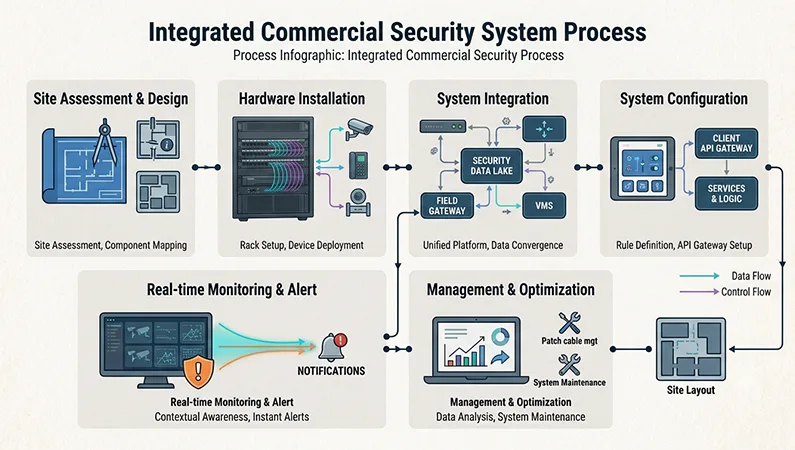
A reliable commercial deployment requires methodical planning. We follow a strict operational framework to ensure your project is delivered on time, on budget, and with minimal disruption to your daily operations.
Phase 1: Comprehensive Site Assessment & Consultation (Week 1)
We begin with a detailed physical audit of your facility. Our engineers walk the site to identify vulnerabilities, map existing network infrastructure, and assess lighting conditions. We consult with your management team to understand your specific operational bottlenecks and compliance requirements.
Phase 2: System Engineering & Design (Weeks 2-3)
Based on the assessment, we engineer a tailored solution. We provide detailed schematics, camera field-of-view maps, and equipment specifications. During this phase, we also define the software integration logic—for example, programming how the access control system should interact with the video platform during an alarm event.
Phase 3: Professional Installation & Deployment (Weeks 4-6)
Our certified technicians execute the installation. We prioritize operational continuity, scheduling disruptive work (like core drilling or heavy cable pulling) during off-hours when necessary. We mount hardware, terminate connections, and establish the secure network backbone.
Phase 4: Integration, Testing & Commissioning (Week 6)
Hardware is only as good as its configuration. We link the disparate systems into a unified management platform. We conduct rigorous stress tests, simulating power failures, network drops, and intrusion events to verify that the system responds exactly as engineered.
Phase 5: Operator Training & Hand-Off
A complex system is useless if your team cannot operate it. We provide comprehensive, hands-on training for your facility managers, HR personnel, and IT staff. We ensure they know how to pull video archives, revoke access credentials, and manage alarm schedules confidently.
Upgrading & Modernizing Your Existing Infrastructure
Many businesses operate with legacy infrastructure that is failing but feel trapped because a complete “rip-and-replace” is too expensive. Elmore Integrated Systems specializes in strategic modernization roadmaps.
Can we keep our existing cameras?
In many cases, yes. If you have legacy analog cameras, we can deploy specialized IP encoders that digitize the analog signal, allowing your old cameras to communicate with a brand-new cloud-based management platform. This allows you to upgrade the “brain” of the system immediately while replacing physical cameras gradually over time to manage capital expenditures.
Migrating to Smart Access
If your facility uses easily cloned, outdated proximity cards, we can upgrade your reader hardware to support highly encrypted smart cards or mobile Bluetooth credentials while utilizing the existing cabling in your walls.
Modernization protects your enterprise against emerging cyber-physical threats without requiring a massive, upfront budget disruption.
Warranty, Maintenance & Long-Term Support
Technology requires upkeep. We view every installation as the beginning of a long-term operational partnership. To protect your investment and ensure continuous uptime, we offer comprehensive support structures.
Proactive Preventive Maintenance
We establish structured maintenance programs tailored to your facility. This includes scheduled physical inspections of camera housings, cleaning lenses in industrial environments, testing battery backups, and verifying door lock strike alignments. Identifying minor wear-and-tear before it causes a system failure prevents costly unplanned downtime.
Firmware & Cyber Hygiene
As physical protection converges with IT, cyber hygiene becomes paramount. Our maintenance agreements include routine firmware updates for all IP cameras, NVRs, and control panels to patch known vulnerabilities and protect your enterprise network from external cyber threats.
Emergency Troubleshooting & Remote Support
When unexpected hardware failures occur, rapid response is critical. Our service desk provides immediate remote diagnostic support. By securely logging into your system, we can often resolve software glitches or reset frozen hardware instantly. If a physical repair is required, our local Ontario technicians are dispatched promptly to restore your facility to safe operation.
Protect your investment with proactive care. [Learn More About Our Services] and preventive maintenance plans.
Industry-Specific Security Solutions
Generic, out-of-the-box equipment fails in complex commercial environments. We engineer infrastructure tailored specifically to the unique operational demands and regulatory realities of your specific industry.
Corporate Offices & Commercial Buildings
In multi-tenant office towers or corporate headquarters, the primary challenge is managing the flow of people without creating a fortress-like atmosphere.
- The Focus: We deploy seamless mobile access control, allowing employees to enter using their smartphones. We integrate elevator dispatch systems to ensure visitors can only access the specific floor of the company they are visiting. Tailgating detection analytics alert management if an unauthorized person follows an employee through a secure door.
Warehouses & Logistics Hubs
Logistics facilities operate 24/7 and encompass massive physical footprints, making them highly vulnerable to perimeter breaches and internal inventory shrinkage.
- The Focus: We implement thermal imaging cameras along fence lines to detect intruders in complete darkness or heavy fog. Inside, high-resolution multi-sensor cameras monitor busy loading docks to provide indisputable evidence during shipping disputes or forklift accidents. Access protocols ensure truck drivers are restricted to designated waiting areas.
Manufacturing & Industrial Facilities
Industrial plants face strict health and safety regulations. The technology here must protect not just property, but human life.
The Focus: We deploy ruggedized, explosion-proof cameras in volatile environments to monitor hazardous processes remotely. Access control is tied directly to safety training databases; an employee cannot unlock the door to the heavy machinery floor unless their safety certifications are current. The ecosystem actively supports operational compliance.
Healthcare & Medical Centers
Hospitals and clinics must balance the need for public accessibility with strict patient privacy laws (such as PHIPA in Ontario) and the protection of highly controlled substances.
- The Focus: We design restrictive access architectures for pharmacies and sterile zones, often requiring dual-authentication (card plus PIN). Video networks are engineered to monitor hallways and waiting rooms while strictly avoiding patient treatment areas to maintain privacy compliance.
Retail Chains & Storefronts
Retailers operate on thin margins, where organized retail crime and fraudulent slip-and-fall liability claims can severely damage profitability.
- The Focus: We integrate high-definition surveillance directly with Point-of-Sale (POS) systems. When management reviews footage of a transaction, the register receipt data is overlaid directly on the video, making it instantly clear if an employee is participating in “sweet-hearting” or unauthorized discounts.
Condominiums & Property Management
Property managers are tasked with providing a safe, welcoming environment for residents while managing high turnover and frequent contractor visits.
- The Focus: We upgrade outdated lobby buzzer systems to modern IP video intercoms, allowing residents to grant access to delivery drivers via a smartphone app. Comprehensive oversight of parking garages and common areas deters vandalism and protects the property management board from liability claims.
Smart Technology & Platform Partnerships
Delivering reliable, commercial-grade infrastructure requires utilizing the industry’s most proven hardware and software ecosystems. We partner with leading global manufacturers to ensure your deployment is robust and future-proof.
Our engineering team holds deep expertise in integrating platforms from:
- Video & Analytics: Axis Communications, Hanwha Vision, Avigilon, Bosch, and Hikvision.
- Access Management: HID Global, Genetec, and Verkada.
- Alarm & Intrusion: Honeywell and DSC.
By utilizing enterprise-grade technologies rather than consumer electronics, we guarantee high performance and operational efficiency.
Frequently Asked Questions
How long does a typical commercial installation take?
Project timelines vary based on facility size and complexity. A standard office access control upgrade may take 3 to 5 days, while a comprehensive, facility-wide integration for a large manufacturing plant can take 4 to 8 weeks. We provide a precise timeline during the engineering phase and coordinate work to minimize operational disruption.
How much does a commercial security system cost?
Costs are highly variable and depend on several factors: the square footage of the facility, the number of doors requiring electronic locks, the density of camera coverage needed, and the condition of your existing network cabling. While we cannot provide a blind quote, we offer thorough site assessments to build an accurate, scalable budget tailored to your exact needs.
Do you provide long-term maintenance after installation?
Absolutely. We view our client relationships as long-term partnerships. We offer structured preventive maintenance agreements that cover routine hardware inspections, camera lens cleaning, software patching, firmware updates, and priority emergency troubleshooting to ensure continuous system uptime.
Can you upgrade our existing system without replacing everything?
Yes. Whenever possible, we leverage your existing infrastructure to maximize your ROI. We can often install IP encoders to bring legacy analog cameras onto a modern network, or upgrade door readers while reusing the existing wiring in your walls. We specialize in phased modernization roadmaps.
Do you work with our existing IT department?
Yes. We collaborate closely with your internal IT team. Because modern protection ecosystems sit on the enterprise network, we coordinate IP addressing, bandwidth allocation, VLAN segmentation, and cybersecurity protocols with your IT directors to ensure the new deployment aligns perfectly with your corporate network policies.
Do you provide professional security assessments?
Yes. Before proposing any hardware, we conduct a comprehensive vulnerability audit. We walk your facility, identify physical risks, evaluate your current technology, and deliver a detailed engineering proposal that directly addresses your operational challenges.
Protect Your Enterprise Today
Elmore Integrated Systems helps organizations design, install, integrate, and maintain reliable technology infrastructure. Stop relying on fragmented technology and manual processes.
[Talk With Our Team] to schedule your comprehensive facility assessment or [Request a Consultation] to explore how a unified protection ecosystem can drive operational efficiency for your business.